John Lennon, Cynicism, and Why I’ll Never Get To Kiss Dean Harris

“For well you know that it’s a fool who plays it cool, by making his world a little colder.” Paul McCartney

images

This past weekend I had the pleasure of going to see the Beatles tribute show, Just Imagine. A lovely and generous friend had offered my family free tickets for a Saturday matinee and, hey, who doesn’t like The Beatles?

The first few minutes of the show required some adjusting, on my part. The guy playing Lennon isn’t exactly a teenager, and when he walked through a pretend cloud onto the stage, a huge stairway (to heaven, I’m guessing) projected onto a scrim behind him, the visual was a little funny at first. He wore tight jeans, bangs and little round glasses. I gave my husband’s hand a secret squeeze and settled in.

Through short monologues, old photos and, of course, his music, Just Imagine tells the story of John Lennon’s life, and his journey as an artist. The guy playing John ended up being great. He was charming and funny and sounded exactly like someone who makes his living being John Lennon should sound. By intermission, my face hurt from smiling.

“What do you think?” My husband asked, as we stood in the lobby in between acts, surrounded by lavender hairdos and pantsuits.

“I love it,” I said. “It’s impossible to watch this show and be cynical.”

Like those little babies you see who, fitted with a little hearing aid, go nuts with happiness at the regular sounds of our boring old world, I still get a kick out of how much better life is, now that I’ve given up believing that everything that makes the human heart sing is lame. Some say that cynicism comes naturally, along with aging, but I disagree. In her blog post 11 Undeniable Signs You’re Becoming Cynical, Kate Gorge describes how getting older can bring on a kind of positive cynicism:

“Things start to seem farcical and ridiculous, and you question more than you did when you were a younger person. It’s not necessarily a bad thing; becoming more cynical means that you stop accepting things on face value and start approaching things with more caution.”

Not to be a stickler, but cynicism is not the same as discernment. Discernment, one of the many gifts of growing older, leads straight to your best life. Cynicism, on the other hand, leads you to the table with “the cool kids,” and anyone who’s lived through middle school knows that’s not nearly as fun as it looks.

I started young. As a little kid, I refused to take part in Easter egg hunts because they were babyish. I didn’t like all the adults standing around smiling and pointing at us kids while we played right into their hands. Not me, I thought, feeling embarrassed for the kids scampering around searching for that pathetic golden egg. No way. I stood alone, with my empty basket, next to the ham.

When I was ten, a class called “For Girls Only” was offered to all us fifth graders, along with an alternative class which, oddly, wasn’t called “For Boys Only,” but, instead, “Kick Ball.” We could choose which class to take, but it was pretty obvious what the grown-ups expected. All the girls in my class took the bait, signing up for the “girl” class and spending an hour a week, for six weeks, talking about periods, vaginas and bonding with the female teachers over stories of bras and underarm hair. Even though I was curious about all those things too, my friend Alyssa and I signed up for Kickball, not because we loved Kickball so much, but because I talked Alissa into agreeing with me that a bunch of girls passing around Tampax and giggling was weird and boring.

I was so cynical that in sixth grade I would not play Spin the Bottle, despite the fact that I burned with passion for Dean Harris, the kid who sat behind me in Social Studies. Instead, I sat on a leaky beanbag chair in the corner and watched him kiss another girl, who had long blonde hair, a Bonnie Bell Lip Smacker hanging around her neck, and was game for anything. I rolled my eyes. I just couldn’t let go. Damn.

I don’t know when I started being so cynical, but I have a good idea why. In my family, unbridled enthusiasm was like wearing a hamburger suit in a shark tank. You were just asking for it. I was pretty good at self-defense, and deciding that everything was stupid was one of my best weapons. If you pretend nothing matters to you, you’ll never be a sucker. Words to live by if you want to protect your heart from, well, everything.

In 1996, I was living in chicago when the Olympic torch relay came through the city. My boyfriend (how I hated that word) and I were on the Michigan Avenue bus, when traffic stopped and the runner made his way, holding the torch overhead, through the street packed with cars and pedestrians. In one of those romantic big city moments, all the passengers all got up from their seats and  opened the windows on the left side, to get a better view. Not me, I stayed put. Olympic torch. What. Ever.

“Want to see?” My boyfriend asked.

“That’s ok.” I turned up Green Day on my Walkman. Even as I said it, I wondered why I just couldn’t take a peak. People were leaning out the windows of our bus, whistling and cheering the runner on. My boyfriend tried to stay in the seat with me, but he just couldn’t. It was too fun, too once-in-a-lifetime, and he went to the left side of the bus with everyone else, while I looked away and felt superior. All those people, waving to the crowd on the street, so uncool, so naive and so awkwardly human.

So how did I get from there, to here? Why, last Saturday, when the pretend John Lennon strolled through the audience with his guitar, did I sing along with all those baby boomers? Why did I clap and sway and la-la-la through the sections where I didn’t know the words?

Because, although it didn’t happen overnight, eventually it dawned on me that being cynical is basically a big drag, and in the words of John Lennon, I just had to let it go.

What a relief!

After the show last Saturday, my husband and I were in the lobby when members of the cast came out, in costume. Fake John Lennon was immediately surrounded by delighted audience members, buzzing with that glass of white zinfandel they had sprung for during intermission, and lining up for pictures. There was a woman close to my age with high hair and a sparkling dress. “You wanna get your picture taken with John?” she asked, waving me to the spot in front of her in line. I looked at her wide smile. This lady was having a blast. She was getting a picture, an autograph and probably a kiss on the lips, if she had her way. My mirror neurons went off like firecrackers. I’ll have what she’s having, I thought, and stepped in line.

If I could, I’d go back in time to that girl, standing by the ham with her arms folded, and share this little secret with her: giving up cynicism feels a lot like holding onto a balloon, very tightly, then finally letting go. Holding on is ok, but nothing compared to the fun of watching it float away. Going, going, gone…

(mostly.)
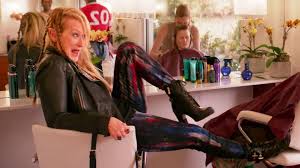
Why Ricki and the Flash Bugged This Midlife Mom

Why Ricki and the Flash Bugged This Midlife Mom

Looking around my home, I see a lot of my mother’s artwork. She didn’t give it to me, I stole it. By the time I made it there to pack up her things, she was past the point of noticing and the pieces only collected dust. Most of her work is signed and dated and tells a story that many women know to be true: it’s an uphill battle to raise kids and make art. By reading the dates, I can see that all of it was made either before she had my sisters and I or after she abandoned us. I do remember her doing some work while we were little, but it’s nothing compared to the stacks of paintings, drawings, prints, sculptures, tiles, ceramics, textiles and more that I found in her tiny one bedroom apartment.
When my husband and I met yesterday for a drink after I saw the latest Meryl Streep movie, “Rickie and the Flash,” I expressed my frustration at some of the more cliche elements of the film.
“I have to believe that it was the work of the suits that ruined that script,” I said, imagining Diablo Cody’s story being punched up and dumbed down by executives, rendering what might have been a thought provoking story about a motherhood, work, responsibility and passion into a shallow stab at a summer hit for mid-lifers.
“The big feel good family dance number? Are you kidding??? And are we to believe that Rickie pulls her daughter out of the pit of depression with the power of a mani/pedi and a cute haircut?” I really asked this, because judging from the Facebook posts I’d already seen, a lot of people believed just that.
“But that’s what people want to see.That’s Hollywood. How do you not make a movie like that here?” my husband asked, as we sat in an outdoor cafe on LaBrea.
“You tell the truth,” I answered.
There’s a line Rick Springfield’s character says in the movie, “It’s not your kids’ job to love you, it’s your job to love them.” I’m sure I’m not alone when I say that that line makes me feel pretty damn good. Sweet relief! It reminds me to stop worrying whether or not my kids will one day want to come home for Thanksgiving. The line, a passionate plea for Rickie to chill out about the fact that she wasn’t there to raise her kids, refers to the fact that children grow up and have their own lives, which may or may not include frequent phone calls or visits and, to a great extent, that is out of your control. But it was delivered by a character who, though foxy, admitted to not being around for his own kids. And it was meant to comfort a mother who very much loved her children, but left them when they were young in order to fulfill her dream of being a musician.
What was his point when he said that? Was he saying you can do whatever you want as long as you love your kids? As long as you love your kids, you are a good enough parent? Newsflash: almost all parents love their kids. That does not make you special.
The fact that our culture has long given men a free pass to do this kind of damage (Rickie gives a pretty good speech about this, citing Mick Jagger’s choice to make kids and leave them) is worthy of discussion, but the film doesn’t really go there. They are not saying we should now even the score and give the same pass to mothers, but they come dangerously close to saying the equivalent of, “no biggie.”
Put down the popcorn everyone, and let’s think this through.
Leaving your family is very different from taking time out to finish your novel, leaving them with friends every Saturday night so you can record your new EP, or having the father take over while you are workshopping a new play in another state for a month or two. I was never the woman who could make art while my toddler played in the tupperware drawer at my feet and, although I’m sure these women exist, I now put them in the category of the Giant Squid, so rare as to be almost mythological.
But it is those decisions, the everyday Sophie’s Choice (shout out to Meryl fans everywhere) moments that tear most mothers apart. We wonder if our five year old knows how desperately we wish she had not just walked in the room and asked for dinner. When a tsunami of rage, similar to the more culturally acceptable rage of a mother bear protecting her young, hits us when our partner brings the kids home early from a trip to the park, a trip meant to give us quiet in which to work, we send them out again, locking the door behind them. We guard those precious hours with tooth and claw, often hating ourselves for it, and sometimes our children.
Life is more complicated than can be sussed out in an hour and forty-two minutes. Film as conversation starter is great, as long as it actually starts the conversation, a real conversation with room for the truth.
The inconvenient truth is that people who make kids should know that those kids need them. Not 24/7, but for a good chunk of the time.
To me, the most touching moment in the movie, which also happened to be a heaping helping of Hollywood bullshit, was when Rickie thanked the stepmother of her children, the woman who stepped up and did all the things that one simply can’t do from a distance, i.e. the doctor appointments, graduations and lunch making. Make no mistake, when a parent leaves, they do so on the back of other parents who come in to pick up the slack. That is, if you’re lucky. If you’re unlucky, no one steps in and you walk around like a stray, tending your own wounds as best you can.
In my life, help came in the form of other people’s mothers. I’ve never actually thought about this, but it’s interesting that it was the women who came to my rescue. I knew a few really wonderful men who did no harm and might have actually helped, but it was the women who I needed and the women who showed up again and again with rides, advice, loans, hugs, books and fierce protection when the chips were down. We might shout from the rooftops that this is unfair or that it’s only because it’s what is expected of women and not of men, but I’d challenge us to just sit with this for a minute. I don’t know what it means, I only know that it is so.
To the parents who say that their kids were better off because they left to pursue their dream, you may be right. I most certainly was better off because my mother packed up her things and disappeared. While my sisters had to live through her tantrums and cruelty through their teenage years, she gave me a gift when she left me on my own.
But still.
But still.
I will always be the child that wasn’t worth sticking around for. Who carries forever the shame that I was so uninteresting, uncompelling, that my own mother, who had an artist’s eye for beauty, would rather leave than be in my presence. Of course it’s also true that my mother loved me, so hey, she did her job, right?
When my mother died a few weeks ago, I was with her. It was one of only a handful of times I had seen her since I was thirteen. At her bedside, with her impossibly small hand, bird bones strung together and curled around mine, I couldn’t help but think, “this is it? THIS is IT???” I simply could not get my head around the fact that our mother/daughter story would end this way. Where’s the arc? Where’s the Big Finish? When will she sing at my wedding and thank the women who filled in for her while she did her thing? Never. That’s when.
Come to think of it, she left me one more gift; she left me with a story to tell. As a mother, it’s my job to stick around and tell it.

The Truth About Cats and Dogs

Getting a dog was a huge mistake.

My husband knew it and was adamant that he wanted nothing to do with this latest obsession of mine.

“Listen to me,” he said, one night in bed. “I do not want a dog. Never.”

My eyes were glued to a dog rescue website on my laptop. So many adorable little creatures, some wearing little bandanas! “I know, sweetie,” I replied, in my husband’s general direction.

“Are you hearing me? I won’t change my mind. I don’t want any part of this.”

“Uh-huh.” I had moved on to the puppies section, furry darlings staring from playpens and the laps of volunteers.

I was warned. The woman who was helping me design a drought tolerant landscape in our front yard tried to talk some sense into me. She pointed out the time and care a dog requires and, when I changed the subject to perhaps getting a flock of chickens, she was decidedly against that, too.

“Don’t do it,” she declared, shoving a razor sharp agave plant into the dirt. “You’ll have crap everywhere. A mess. You’ll hate it.”

I took the advice to heart, at least when it came to the chickens.

But a dog was different, I reasoned to myself. Looking around my urban neighborhood, it seemed like everyone had a dog and, judging from the number of dog parks, dog boutiques and even dog bakeries that were cropping up all around the San Fernando Valley, they downright worshiped them.

I remember a friend of mine confiding to me that, as she was desperately and unsuccessfully trying to get pregnant, she began to see pregnant women everywhere, imagining their lives to be perfect and her own to be sorely lacking. I experienced a less painful, but vaguely similar feeling. Those people with dogs must be more loving, more laid back (bring on the crap!) and just plain happier, in general.

Of course, there was also the matter of my two young sons who, if I didn’t do something quick, would miss out on the requisite “boy and his dog” experience.Though most of my friends smiled and agreed when I suggested my kids would love a dog, they cautioned me about my expectations.

“You’ll end up being the only one who walks it,” they said.

“I’m ok with that. I could use the exercise anyway,” I countered.

“Your kids will be grown and gone and you’ll still have to take care of that animal.”

“I’m not getting it for the kids. This will be my dog,” I assured them.

“It’s like having another child.”

Ok, I had to give this last one some thought. My kids were just getting to the point where they could do for themselves a little more and I’ll admit, I was loving it.

Eventually, I shook it off. “If it was that hard, no one would do it! Everyone I know has a dog, so it can’t be that much of a pain in the ass.”

Oh, the hubris.

It turned out that having a dog was a gigantic pain in the ass and that everything I had been told was true. It was also true that my dear husband, always so willing to do his part with the house and the kids, really meant it when he said he wanted zero part of my grand plan to become a dog owner. On this issue, he was crystal clear. I was on my own.

Except now, I had company. Constant company.

During our first week, Jackson, our new two year old terrier mix, followed me everywhere, and when he couldn’t follow me (on the advice of the trainer at Pet Orphans, we were crate training the little darling), his oddly human-ish eyes were pinned on me with a kind of psychic Velcro. I was reminded of those early days of parenting when all my senses were heightened in response to my baby’s needs. But whereas that had been a fulfilling and exciting time, aided by bonding hormones and the knowledge that I was doing an important job that would one day result in a grown up who might, god willing, at least take me to lunch, caring for this dog, this “orphan”, drained me.

Within the first few days, I noticed that I smelled like dog. I asked my husband if he noticed and he said yes, in fact our whole house now smelled like dog. He wasn’t happy about it and, predictably, this made me feel guilty since, through no fault of his own, he was now forced to live my nightmare. I bought lavender candles and opened the windows as often as possible.

Although quiet during the day, Jackson barked all night long. All. Night. Long. I moved the crate next to my bed and that did the trick but then, instead of the barking, we had what amounted to an elderly fat man with an adenoid problem sleeping with us. My husband moved into the guest room and told me he’d return when I “figured everything out.”

We relocated the crate into my son’s room, who willingly agreed to keep the pooch company during the night. I thought this very sweet, especially since Jackson had taken to “hearding” my boy through the house, nipping at his backside and staring him down. This sleeping arrangement worked at first, but eventually he started having nightmares, waking in tears and asking to sleep with us. I’m referring to the dog, of course.

Finally, after a few weeks of my sleeping on the couch nearby, Jackson acclimated to the family room and I cheerfully remarked to my husband, over a third cup of coffee (I wasn’t yet used to the six a.m. wake up that was to be my new normal), how great it is that dogs sleep at night, unlike cats, who prowl around and walk on your head.

“And it’s so sweet how he just goes right to bed at night, just like a little person!” I intoned, adding up all the ways I could think of that dog ownership didn’t suck. “Also, he really seems to want to please me. Cats don’t care what you think,” I heard myself say. This was a pro-canine argument I had long heard dog people make, and the minute I said it I looked at my husband, sipping his coffee under the ever-watchful eye of Jackson. Did I detect a look of betrayal?

Chris and I were cat people when we met. We each brought two with us when we moved in together and one, at twenty years old and counting, was still hanging on.

“I think there’s something in a dog person that needs to be adored,” he would say, on those lazy Sundays early in our relationship.

“I think all people like to be adored.” Sometimes I just liked to be contrary. The truth was, I thought he had a point.

“But there is a personality type that needs someone waiting for them when they get home. That needs all the slobbering and tail wagging.” I’d nod in agreement as our black cat walked over the morning paper, situating himself dead center on the Style section.

So there I sat, fourteen years later, with a new dog I desperately wished I had never brought home.

Though I loved the exercise I was getting on our twice daily walks, I soon developed plantar fasciitis and a bunion. And no one warned me about the cost of grooming, food, vet bills and, if you planned on having any life whatsoever, occasional doggy daycare. It wouldn’t have mattered if they had, of course. I was hell bent on trying it out for myself and would never have listened.

Late one night, I found myself trolling the internet looking for how I might deactivate his chip, the little homing device that all rescue places insist on putting in your animal before you take them home, so that I could bring him to a shelter anonymously. It had been a month at that point, I was exhausted and depressed and had come to the conclusion that a royal mistake had been made. I wanted to turn back the clock and take it all back. The memory of my life before Jackson had a rosy glow about it: the mornings spent making pancakes with my boys instead of tying on running shoes and being pulled out the front door with a fist full of biodegradable poop bags ($5.00 for a box of thirty), the long days at the beach without dashing home in the hope that he hadn’t, once again, peed on our bedroom curtains. God, the simplicity of it all!

A word of warning to anyone who recognizes themselves in my story. Do not go online and say that you want to get rid of your dog. Forget flaming, you will be incinerated. Just an innocent question about, say, finding your dog a new home will bring down onto you such holy hell as cannot be described here.

Pet Orphans, agrees to take any animal you adopt from them back, no questions asked and I considered doing it, telling the kids that he bolted away from me on our walk (never mind that he wouldn’t let me out of his sight for even a minute, much less take off on his own), but I couldn’t imagine the shame of returning him to the disapproving volunteer, tail between my legs, so to speak. Besides how is one, in this day of Social Media (status update: introducing the newest member of the family!!! J 63 Likes) supposed to explain to friends and relatives that no, there was nothing technically wrong with the dog, other than his being one? No one would understand. I would have not a friend in the world.

“Just do it. Who cares what people think?” My best friend JoDee lives a thousand miles away, but because the dog walks were long and boring I started calling her to chat twice a day.

“I can’t. I’ll feel terrible,” I admitted. “Can’t I get someone to do it for me?” I thought of all the people I knew who might like to earn fifty bucks for a half hour of work.

“You could totally pay someone to take him back for you. Get a teenager to do it. Just don’t let the boys find out.”

I thought of my boys and how Jackson licked them head to toe as we snuggled on the couch to read at night. My own mother had a habit of bringing animals home and then giving up on them, sending them “to the farm,” or sometimes just cutting to the chase and releasing them into the night. Most of these animals weren’t around long enough for me to feel close to and, as you can probably guess, I’ve never been a real animal person, exactly. But still, those are sad memories and I refused to recreate those in the minds and hearts of my own kids.

And my husband— would I have to lie about it to him too? As much as he maintained his position on my decision to get a dog, I knew he was a softie at heart. He was the one always putting ice cubes in the cat’s water. The one who insisted on keeping the porch light off when we discovered a bird’s nest on top, with three little blue eggs inside. He talked a good game, but he would never look at me the same if I gave Jackson back and made him an orphan again.

In her TED talk on regret, Kathryn Schulz said, “the point isn’t to live without any regrets. The point is to not hate ourselves for having them.”

If I could turn back time and, as with he chickens, heed the warnings of friends and not get a dog, would I? Absolutely. Jackson is now four years old and, thanks to a few sessions with a trainer ($50.00 an hour x2), he no longer snaps at my son’s rear, but he’s developed a neurotic habit of licking our couch and we will have to order new bedroom curtains soon. Nothing about this experience turned out like I’d planned, but seeing as how we’ve all made it through four years at this point, it’s safe to say that Jackson will live out his days as a permanent member of our family.

Tonight I’ll take him for a long walk he loves down the block with the purple Jacarandas and the white cat who sneers at us as we pass her yard. I’m almost fifty years old, and I’ve never dreamed of living my life free of screw-ups. I do dream of owning my mistakes with humor and, if I can manage it, compassion. The cat’s tail doubles in size and she lets out a hiss. “Come on, buddy,” I say, Jackson strains at his leash, always ready to make a friend. “You’ll never win her over.”

Maybe not but, just like a dog, that won’t stop him from trying.